The Speculative Economy
MLP Media • Sun Jun 21 2026
“How long is now?” The screen asks. “Is it measurable? Is it a billionth of a second? A trillionth of a second? When it’s now on earth, is it now on Saturn? Have you ever left now? Would it surprise you to learn that there’s a lot of places on earth where now is happening at different times? For us, there is a continual moving point in time that we call “now,” this now separates the past from the future, it is always now. Time is just a long string of now’s that stop at the present.”
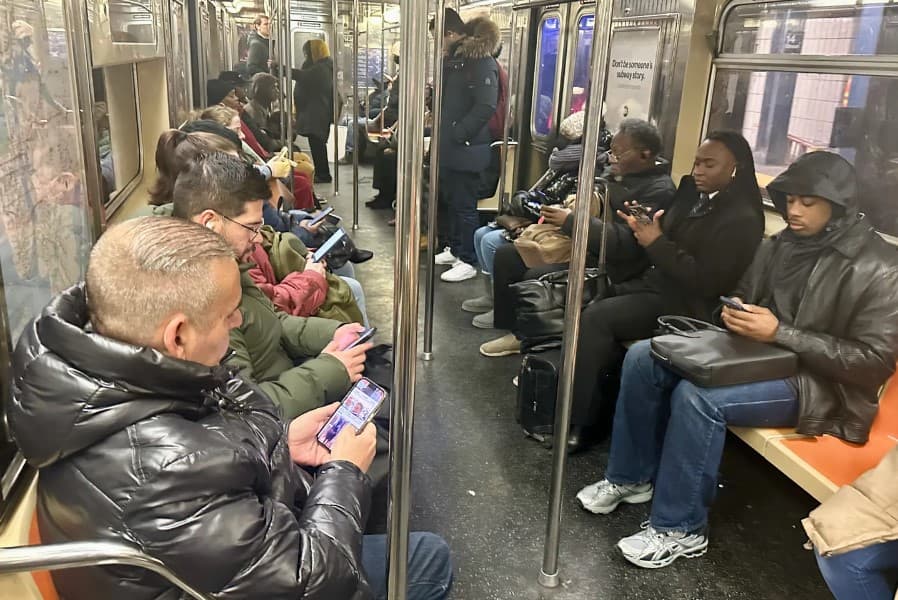
If you go anywhere in public nowadays you are bound to see disassociation. Multiple “now’s” closed off from one and other yet together in silence. Everyone’s heads down and eyes preoccupied by screens. It’s only in rare instances that you see everyone in a public space riding the same time-wave. We’ve normalized this new impulse of being alone together in disassociation. Which has allowed a broader fracturing of reality to be expanded upon by technocrats and their appropriators. Much to our chagrin, this phenomenon has allowed the floodgates to open for a new ontological empire to be constructed that sits upon a foundational propaganda where the penultimate ‘now’ is an ever-shifting projection of speculations and/or suggestions. This may seem harmless and just an inconsequential marker of technological progress, but by turning ‘now’ into a superconducting scroll/feed, the speed of life has morphed into a new hypnosis.
There’s an old maxim that says media can't tell you what to think, but they can tell you what to think about.
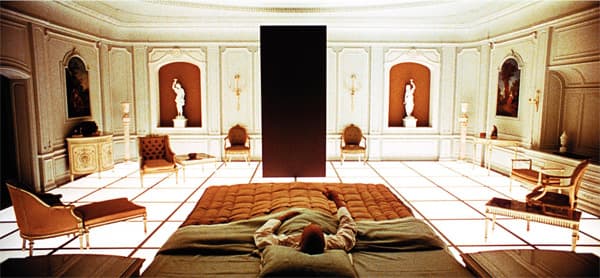
Through their calculated uses of direct and indirect suggestion, technocrats and their appropriators have captured our perception of what’s present. Headlines have become articles in themselves due to information inundation. The news is so continuously instantaneous that every second, every screen refresh, every channel flip a new headline or clip pops up perceiving what’s happening in the ever elusive ‘now.’ So much so that we have sacrificed our cognitive sovereignty to its conductivity. Screens are the new monolith.
As discussed in ‘The Attention Economy,’ consciousness (like reality itself) is non-local because it is a byproduct of the universe. So the reflexive truth of balance over order should be clear, but there are still those that see the two as inseparable. This delusion is caused by craving order over everything, even our universe, but the truth is our universe is reflexive and there is only a balance-based duality to it (rooted in entropy and fate) that must be respected and allowed to interplay naturally.
From an ontological perspective, forms are in a forever process of transforming or weakening, so succession must always be happening in the name of balance. To try to apply a man-made conductivity to this flow of forms is to play God.
Heraclitus famously stated, "No man ever steps in the same river twice," which means that both the river and the person are constantly changing, highlighting the idea that everything is naturally in a state of constant flux. This quote emphasizes the impermanence of life and the inevitability of change and how we must reckon with both continuously throughout our journey. The becoming is realer than the being in this sense.
But with this new hostile takeover, technocrats and their appropriators are trying to establish an astroturfed reality atop our natural one where they can conduct a permanent theater of artificial flux, forever capturing our consciousness. Which, as of “now” (pun intended), seems to be working.
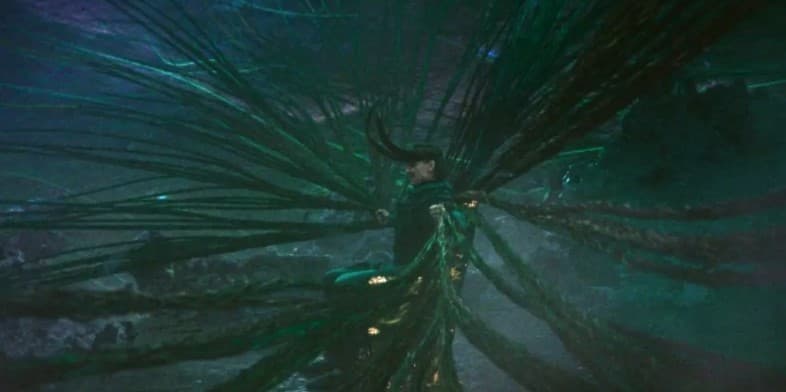
In his 2025 Nobel Prize Winning Discovery in Physics, John Martinis and his colleagues proved that a macro-scale system can tunnel through a barrier to create a measurable new frequency. It does this through consolidating down to one uniform wave, allowing it to then tunnel through and become part of an artificial atom. When a collection of atoms consolidate they become a solid. In order for this to happen, its energy must be reduced. This same consolidation pattern happens during superconductivity.
In this theory, screens act as the barrier, phasing the observed “macro-consciousness” into a lo-fi pattern that’s manipulated by the appropriator/controller. These processes then allow for an artificial/astroturfed reality to be manifested, ingesting the whole.
It’s important to remember, in its essence, time is a long string of now’s that abruptly stop at the present. Looking back on them, we see them as instances in time and points in our movement through space, but now, due to this economy of speculation that theatrically narrativizes our moments, instead of these ‘now’s’ being linear, we must reckon with the truth that they have become convergent. Conspiring against us.